
The Order of the Temple
The Great Priory of Scotland
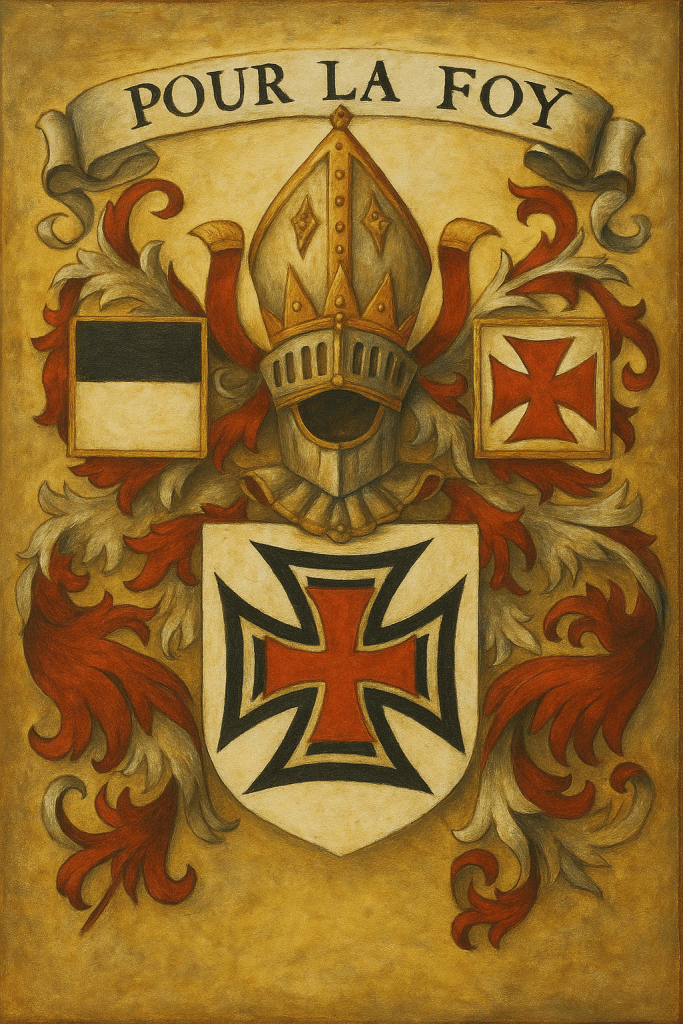
Welcome to the Great Priory of Scotland, the governing body for the Masonic Order of the Temple and of St John of Jerusalem, Palestine, Rhodes and Malta within Scotland, where the Knights Templar meet in a spirit of Christian faith, service and chivalry. Here you will find news, history and guidance about our work of this Great Priory, along with information for those who wish to learn more about our traditions and charitable endeavours. Our story in Scotland reaches back to the early nineteenth century, with the establishment of the Great Priory in 1811, and continues today through an active programme of meetings and events across the country. We look forward to welcoming you, and to sharing the friendship and values that define our Order.
Structure
The Great Priory of Scotland oversees the Order through a structure District Grand Priories. Within Scotland there are nine Districts supervising a total of sixty four Preceptories, with a further two Preceptories forming the Home District. Overseas the Order is organised into District Grand Priories that together comprise forty nine Preceptories, each District Grand Priory led by a District Grand Prior who ensures good governance, administration, and unity of ritual and practice. Great Priory musters twice each year in Freemasons Hall, Edinburgh, where the business of the Order is conducted, while the administrative headquarters are at Grangemouth, providing day to day support, records, communications and guidance to Districts and Preceptories. The Great Priory of Scotland stretches from the Borders in the south to Orkney in the north, and the Order’s international reach includes Preceptories in places such as Lima in Peru, New South Wales, Tasmania, Jamaica and across the Caribbean, reflecting a living tradition that combines chivalric values, Christian, charitable endeavour and close fraternal ties at home and abroad.
Our Story
The tradition that the Masonic Order of the Temple is the legitimate descendant of the Crusading Order is not supported by documentary proofs Much can be made of the Masonic connections to Roslin Chapel built by William de St Clair of Roslin.
In the month of December 1778 the Lodge of Scoon and Perth conferred the “six sundry steps of Masonry” on the Office-bearers of St. Stephens Lodge in Edinburgh, viz.: “Past the Chair, Excellent and Super Excellent Mason, Arch and Royal Arch Mason and, lastly, Knights of Malta”.
Less than one year later, in October 1779, Archibald, Earl of Eglintoune, the Grand Master of Lodge Mother Kilwinning, issued a charter for a lodge in Dublin by name of the “High Knight Templars of Ireland Lodge”.
This was the body which shortly afterwards became the Early Grand Encampment of Ireland, and which, in its turn over twenty years later, issued many charters for Encampments in Scotland, some of which still flourish under the Great Priory of Scotland.
The practice of the so-called “high degrees” became so widespread in the Craft Lodges in the last decades of the eighteenth century in Scotland that the Grand Lodge of Scotland issued a directive in October 1800 “prohibiting and discharging its daughters to hold any meetings above the degree of Master Mason, under penalty of forfeiture of their Charter”.
This ruling did not have immediate results, as many of the Lodges continued in the old ways for some years, but it did lead to many Scottish masons applying to the Early Grand Encampment of Ireland for charters, as has been stated above.
In 1805 one such charter was issued to a Knight Templar group in Edinburgh under the title of the “Edinburgh Encampment No. 31”. A little later this group, under Alexander Deuchar, became the “Grand Assembly of Knights Templar in Edinburgh”, and proceeded to seek a charter from the Duke of Kent, Grand Master of the Order in England.
In 1811 the Duke granted a charter setting up the “Royal Grand Conclave of Scotland”, with Deuchar as Grand Master, to take over the Order in this country.
During the period when Sir David Milne was Grand Master, an attempt was made to re-constitute the Order upon a non-masonic basis. As part of this plan, a Priory was set up in London, and a number of prominent men were admitted to the Order. All were Freemasons, but it is thought that at least one non-masonic or Chivalric Knight was created in Edinburgh about 1847. Also, as a result of this plan the ritual was entirely re-written to give a close resemblance to the little that was known of the ancient Templar ceremonies.
The non-masonic phase lasted only for about twelve years, but we have received from it the fine and distinctly Scottish ritual which we practise today
 Great Priory of Scotland